
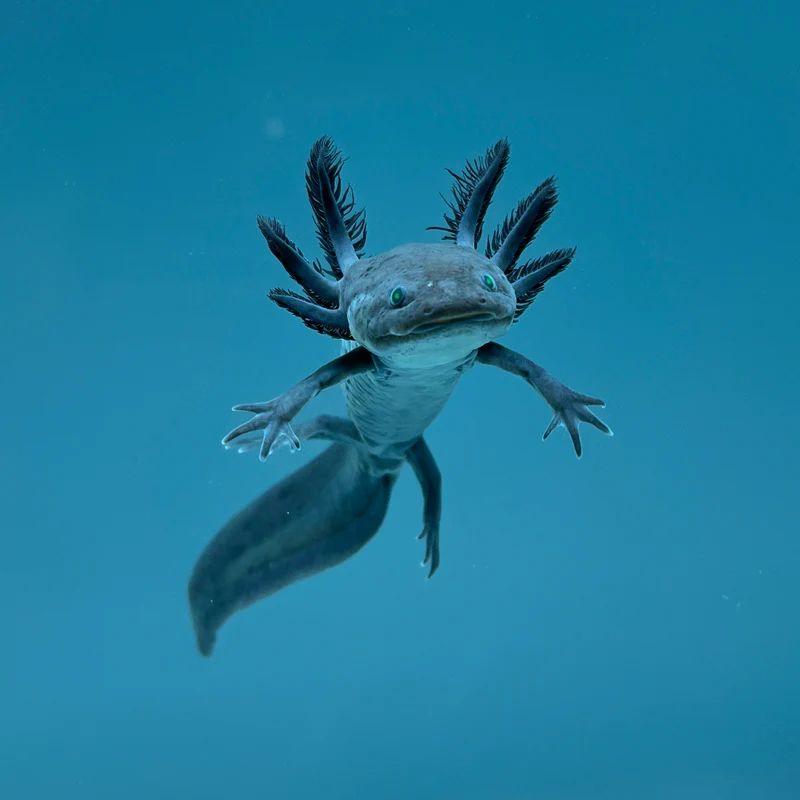


GFP Melanoid Axolotl
Price range: $169.99 through $269.99
GFP Melanoid axolotls feature an elegant black color with piercing green eyes. The contrast between its body and eyes alone make it seem as if it were from another planet.
What is a GFP Melanoid Axolotl?
A GFP Melanoid Axolotl is a unique combination of two fascinating traits:
-
GFP (Green Fluorescent Protein) — a genetic marker that makes the axolotl glow bright green under UV or blue light.
-
Melanoid — a morph that produces extra melanin, giving the axolotl a deep black or dark gray coloration with no shiny iridophores (reflective pigments).
When combined, this morph results in a dark, velvety axolotl that glows neon green under certain lighting, creating an otherworldly appearance.
🌈 Appearance
-
Base Color: Deep black, dark brown, or grayish-black.
-
Under UV Light: Glows vibrant green due to the GFP gene.
-
Eyes: Typically dark or black with no shine.
-
Gills: Dark purple or blackish tones; may faintly glow under UV light.
-
Skin Texture: Smooth and velvety, especially under ambient light.
🔬 Genetics
-
Melanoid gene (m/m): Suppresses iridophores and xanthophores (no gold or shiny specks).
-
GFP gene: Introduced from jellyfish DNA in lab breeding; it’s heritable and can appear in any morph if one parent carries the GFP trait.
-
Inheritance: Dominant — if one parent has GFP, some offspring will glow.
🧡 Behavior and Temperament
Like all axolotls, GFP Melanoids are:
-
Calm, slow-moving, and mostly nocturnal.
-
Curious about their surroundings.
-
Solitary by nature — they can be kept with others of similar size, but avoid overcrowding or mixing morphs of very different sizes.
💧 Care Requirements
-
Tank Size: Minimum 20 gallons for one adult.
-
Water Temperature: 60–68°F (16–20°C).
-
pH Range: 7.0–8.0.
-
Substrate: Fine sand or bare-bottom tank (avoid gravel).
-
Diet: Earthworms, bloodworms, pellets, or axolotl-safe frozen foods.
-
Lighting: Low light (UV only for occasional viewing of the GFP glow).
🌟 Special Feature – The Glow
-
The GFP glow does not harm the axolotl.
-
It’s visible only under UV or blue LED light.
-
Do not expose them to strong UV light for long periods — use it only briefly for observation or photography.
🐣 Breeding Notes
-
GFP is dominant, so some offspring of a GFP parent will inherit the glowing trait.
-
The Melanoid gene must be inherited from both parents to express the dark coloration.
-
You can produce non-glowing melanoids, glowing non-melanoids, or glowing melanoids depending on parental genetics.
⚖️ Pros & Cons
✅ Pros
-
Rare and visually striking.
-
Unique glowing trait.
-
Hardy and easy to care for.
⚠️ Cons
-
Slightly higher cost than non-GFP morphs.
-
Some may fade slightly with age under normal light.
-
Requires gentle handling and stable tank conditions.
💲 Market Insight
-
Price Range: Typically $70–$150 (depending on breeder, size, and glow intensity).
-
Popularity: High among collectors and enthusiasts due to its glow-in-the-dark appeal.
| Size |
Juvenile(3-5 in.) ,Sub-Adult (5-8 in.) ,Adult Male (8+ in.) ,Adult Female (8+ in.) |
|---|
Related products
Melanoid
The Melanoid axolotl is a striking color morph of the axolotl, distinguished by its completely dark, almost black appearance. Unlike other axolotl variants that may have pigmentation patterns, the Melanoid’s coloration is uniform, including the gills, skin, and eyes, giving it a sleek and dramatic look.
Physical Traits
-
Color: Deep, dark brown to black; lacks the golden or iridescent shimmer seen in wild types.
-
Eyes: Typically dark, blending seamlessly with the body.
-
Gills: Dark-colored, often black or deep brown, enhancing its overall uniformity.
-
Size: Comparable to other axolotls; adults typically grow 9–12 inches (23–30 cm) in length.
Behavior and Temperament
-
Docile and calm: Like other axolotls, Melanoids are slow-moving and enjoy hiding in aquatic plants or caves.
-
Nocturnal tendencies: They may be more active during low-light periods.
-
Feeding: Carnivorous; enjoys worms, small fish, and specialized axolotl pellets.
Care Requirements
-
Tank: Minimum 20 gallons for one adult; prefer clean, cool water (~16–18°C / 60–64°F).
-
Water quality: Sensitive to poor water conditions; regular water changes are crucial.
-
Substrate: Fine sand or bare-bottom recommended to prevent ingestion of gravel.
-
Tank mates: Best kept alone or with other Melanoids; avoid smaller fish that could be eaten.
Genetics
The Melanoid morph is the result of specific genetic traits that reduce reflective pigment cells (iridophores) and yellow pigment (xanthophores), leaving only black pigment (melanophores). This makes them one of the most uniform and visually striking morphs available.
Popularity
-
Highly sought after by axolotl enthusiasts for their unique, dramatic appearance.
-
Often paired with other morphs for breeding to explore new color combinations.
Reviews
There are no reviews yet.