
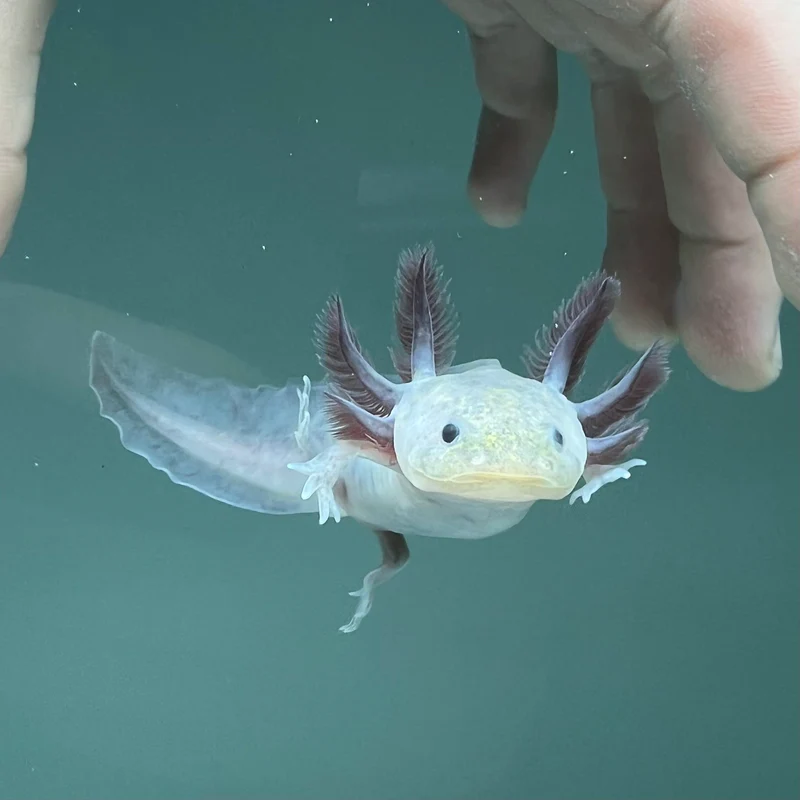
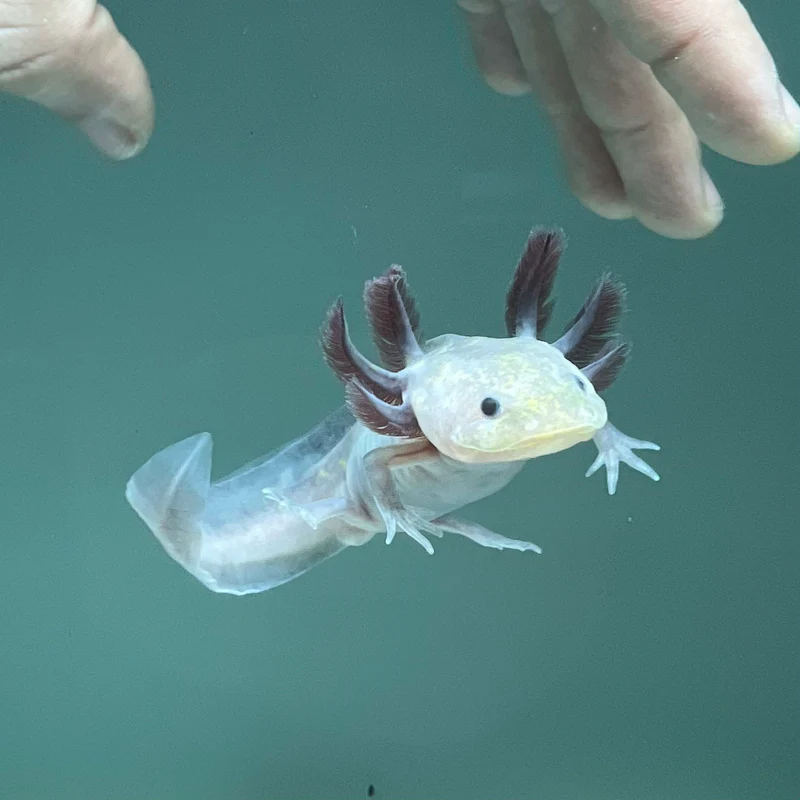
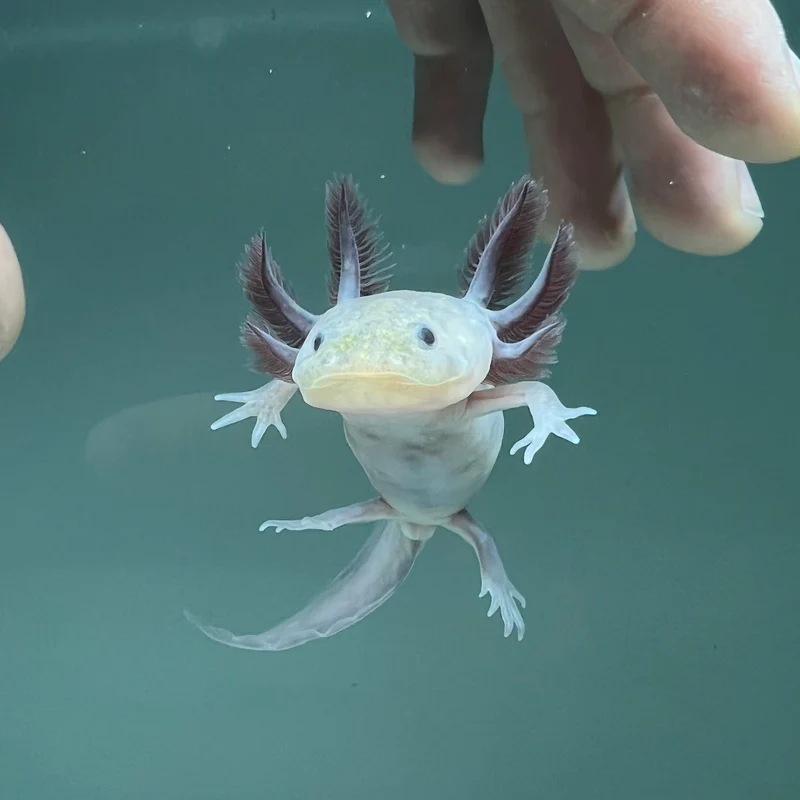


Hypomelanistic Melanoid Axolotl
Price range: $379.99 through $479.99
Hypomelanistic axolotls are among one of the newest morphs to exist. Unlike Melanoid axolotls, Hypomelanistics are significantly brighter in color. This results in a one-of-a-kind purple-gray coloration that is unique to each specimen!
Appearance
The Hypomelanistic Melanoid is a striking axolotl morph that combines two unique traits:
-
Melanoid Base: A solid dark body color, often deep black or very dark brown, with no gold or iridophore reflection.
-
Hypomelanistic Trait: A reduction in melanin intensity, giving the axolotl a slightly lighter or muted black appearance compared to a standard Melanoid.
The result is a sleek, dark axolotl with a subtle, smoky tone, often appearing almost charcoal or slate under certain lighting. Eyes are typically darker but not jet black, sometimes showing a hint of reddish-brown.
Size & Growth
-
Adult Size: 9–12 inches (23–30 cm).
-
Growth is similar to other morphs, with healthy care, they reach full size in 12–18 months.
Temperament
-
Generally docile and curious.
-
Like other axolotls, they prefer calm environments and minimal stress.
-
Can be shy initially, especially in brightly lit tanks due to darker pigmentation highlighting their eyes.
Tank Requirements
-
Tank Size: Minimum 20 gallons for a single adult. Larger is preferred for multiple axolotls.
-
Water Temperature: 60–68°F (16–20°C).
-
Water Quality: Very important—clean, well-filtered water with low ammonia and nitrites.
-
Substrate: Fine sand is best; avoid gravel that can be ingested.
Diet
-
Carnivorous: Live or frozen foods like bloodworms, blackworms, earthworms, and axolotl pellets.
-
Feed 3–5 times per week for adults; younger axolotls may require daily feeding.
Breeding
-
Can be bred with other Melanoids or hypomelanistic variants.
-
Offspring coloration depends on the genetic traits of both parents—careful selection can produce unique dark morphs.
Care Tips
-
Sensitive to high temperatures; avoid water above 70°F (21°C).
-
Avoid overcrowding; darker morphs can sometimes display stress more readily.
-
Regular water changes (20–30% weekly) help maintain optimal health.
| Size |
Juvenile(3-5 in.) ,Sub-Adult (5-8 in.) ,Adult Male (8+ in.) ,Adult Female (8+ in.) |
|---|
Related products
Burp (Unsexed)
Melanoid
The Melanoid axolotl is a striking color morph of the axolotl, distinguished by its completely dark, almost black appearance. Unlike other axolotl variants that may have pigmentation patterns, the Melanoid’s coloration is uniform, including the gills, skin, and eyes, giving it a sleek and dramatic look.
Physical Traits
-
Color: Deep, dark brown to black; lacks the golden or iridescent shimmer seen in wild types.
-
Eyes: Typically dark, blending seamlessly with the body.
-
Gills: Dark-colored, often black or deep brown, enhancing its overall uniformity.
-
Size: Comparable to other axolotls; adults typically grow 9–12 inches (23–30 cm) in length.
Behavior and Temperament
-
Docile and calm: Like other axolotls, Melanoids are slow-moving and enjoy hiding in aquatic plants or caves.
-
Nocturnal tendencies: They may be more active during low-light periods.
-
Feeding: Carnivorous; enjoys worms, small fish, and specialized axolotl pellets.
Care Requirements
-
Tank: Minimum 20 gallons for one adult; prefer clean, cool water (~16–18°C / 60–64°F).
-
Water quality: Sensitive to poor water conditions; regular water changes are crucial.
-
Substrate: Fine sand or bare-bottom recommended to prevent ingestion of gravel.
-
Tank mates: Best kept alone or with other Melanoids; avoid smaller fish that could be eaten.
Genetics
The Melanoid morph is the result of specific genetic traits that reduce reflective pigment cells (iridophores) and yellow pigment (xanthophores), leaving only black pigment (melanophores). This makes them one of the most uniform and visually striking morphs available.
Popularity
-
Highly sought after by axolotl enthusiasts for their unique, dramatic appearance.
-
Often paired with other morphs for breeding to explore new color combinations.
Reviews
There are no reviews yet.