
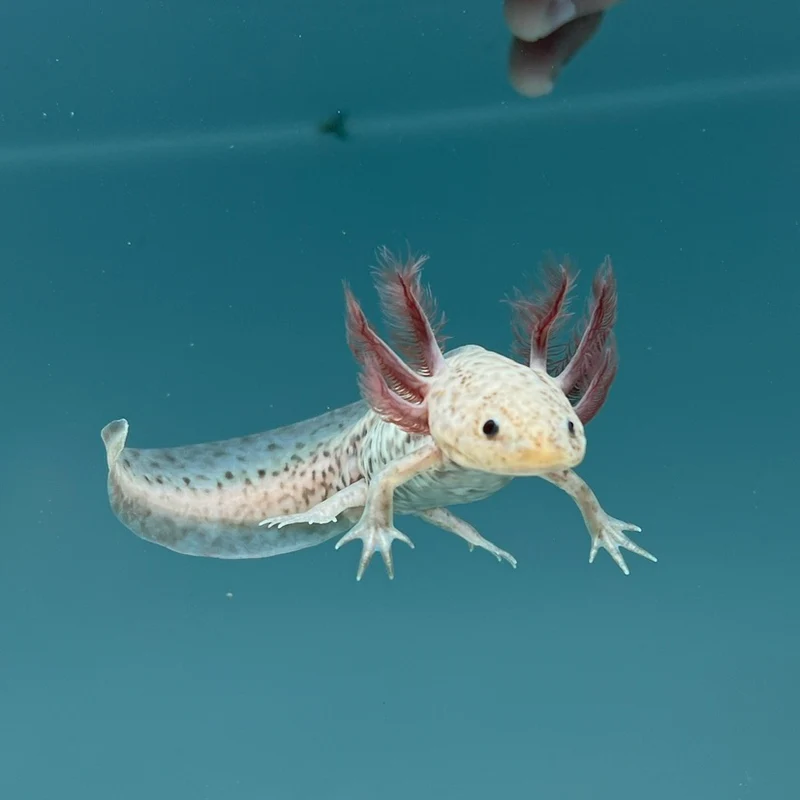


Axanthic Copper Axolotl
Price range: $219.99 through $294.99
Axanthic Copper axolotls lack xanthophores, a chromatophore responsible for producing yellow pigments. This results in a highly-sought-after lavender coloration covering their whole body.
Axanthic Copper Axolotl
Axanthic Copper axolotls lack xanthophores, a chromatophore responsible for producing yellow pigments. This results in a highly-sought-after lavender coloration covering their whole body.
Appearance
-
Coloration: Axanthic Copper Axolotls lack yellow pigmentation (axanthic), so their coppery tones are more muted, with a mix of silver-gray and coppery orange hues.
-
Eyes: Usually dark or black due to melanin presence, giving a striking contrast with their body.
-
Gills: Bright reddish or pink gills are common, creating a vivid accent.
-
Skin Texture: Smooth and slightly translucent, showing faint underlying structures.
Genetics
-
Axanthic Trait: The axanthic gene removes yellow pigmentation but leaves black, red, and white pigments intact.
-
Copper Coloring: A separate color morph that adds a reddish-orange metallic sheen.
-
Combination: The Axanthic Copper results from breeding a copper axolotl with an axanthic, producing an animal with a muted yet metallic copper appearance.
Size & Growth
-
Adult Size: Typically 9–12 inches (23–30 cm).
-
Growth Rate: Fast in the first 6–8 months with proper diet and water conditions.
Temperament
-
Behavior: Peaceful and calm, like most axolotls.
-
Compatibility: Can be housed with similar-sized axolotls, but avoid mixing with aggressive feeders.
Care Requirements
-
Tank Size: Minimum 20 gallons for one adult.
-
Water Conditions:
-
Temperature: 60–68°F (16–20°C)
-
pH: 6.5–8.0
-
Ammonia/Nitrites: 0 ppm, Nitrates < 20 ppm
-
-
Diet: Carnivorous — earthworms, bloodworms, small pellets.
-
Lighting: Low; axolotls prefer dim environments.
-
Substrate: Fine sand or bare bottom recommended to avoid ingestion of gravel.
Breeding Notes
-
Axanthic Copper Axolotls can be bred with other morphs to produce unique combinations.
-
Axanthic trait is recessive, so two carriers are needed to consistently produce axanthic offspring.
Interesting Facts
-
Their muted copper tone is especially appreciated by hobbyists who like subtle, metallic colors.
-
Axanthic Copper Axolotls are rarer than standard copper or wild-type morphs, making them more sought-after.
- If you are a first-time axolotl owner in North Florida, we highly recommend coming by our store location to meet with our axolotl experts and learn all about what you need to do to prepare the perfect new home for your axolotl. If you aren’t in North Florida, be sure you read both of the guides above, then visit our Blog to get more information about raising these amazing aquatic pets.
| Size |
Juvenile(3-5 in.) ,Sub-Adult (5-8 in.) ,Adult Male (8+ in.) ,Adult Female (8+ in.) |
|---|
Related products
Light Hypomelanistic Melanoid Axolotl
Light Hypomelanistic Melanoid Axolotl: A Rare and Stunning Morph Explained
The Light Hypomelanistic Melanoid Axolotl is one of the most unique and visually striking axolotl morphs. Known for its subtle coloration, smooth texture, and captivating appearance, this morph is highly sought after by axolotl enthusiasts and breeders alike.
What Is a Light Hypomelanistic Melanoid Axolotl?
A Light Hypomelanistic Melanoid Axolotl combines two rare genetic traits — hypomelanism and melanoidism.
-
Hypomelanistic means the axolotl has reduced melanin, resulting in a lighter or faded coloration compared to normal melanoids.
-
Melanoid axolotls, on the other hand, lack iridophores (the shiny pigment cells), giving them a smooth, matte appearance.
When these traits are combined, the result is a soft gray or smoky brown axolotl with an elegant, muted tone and dark eyes — a perfect blend of mystery and beauty.
Appearance and Coloration
The Light Hypomelanistic Melanoid axolotl typically features:
-
Light gray or beige skin with subtle undertones of lavender or brown
-
Dark, non-shiny eyes due to the melanoid gene
-
Minimal to no iridescence, giving the body a velvety look
-
Occasionally, a faint golden or cream hue under strong lighting
This morph is especially admired for its balanced contrast — not too dark, not too pale — making it a showpiece in any aquarium.
Genetics and Rarity
Both melanoid and hypomelanistic genes are recessive, meaning they must be inherited from both parents for the morph to appear. Because of this, Light Hypomelanistic Melanoids are relatively rare and often bred intentionally by experienced axolotl breeders.
Breeding this morph requires:
-
Careful pairing of genetically compatible axolotls
-
Knowledge of lineage to prevent inbreeding
-
Patience, as not every clutch will produce this specific color variation
Care and Habitat Needs
Despite their rare genetics, Light Hypomelanistic Melanoid Axolotls require the same care as other axolotl morphs. To keep them healthy and vibrant:
-
Maintain water temperature between 60–64°F (16–18°C)
-
Keep pH levels between 6.5 and 8.0
-
Provide clean, dechlorinated water and perform regular water changes
-
Offer a balanced diet of earthworms, pellets, or bloodworms
-
Avoid strong lighting, as axolotls are naturally light-sensitive
Personality and Behavior
Like other axolotls, the Light Hypomelanistic Melanoid is calm, curious, and non-aggressive. They enjoy exploring, resting on smooth surfaces, and occasionally interacting with their surroundings. Their gentle demeanor makes them ideal for both beginner and experienced keepers.
Why They’re Popular
Collectors love this morph for its rare genetics and subtle elegance. Its soft, smoky appearance contrasts beautifully with brighter morphs like Leucistic or Golden Albino axolotls. Because of its scarcity, Light Hypomelanistic Melanoids are often seen as a premium or showcase morph among axolotl enthusiasts.
Final Thoughts
The Light Hypomelanistic Melanoid Axolotl is a fascinating and graceful morph that highlights the incredible genetic diversity of these beloved amphibians. Whether you’re a dedicated breeder or a passionate hobbyist, this morph’s rarity and understated beauty make it a prized addition to any collection.
Melanoid
The Melanoid axolotl is a striking color morph of the axolotl, distinguished by its completely dark, almost black appearance. Unlike other axolotl variants that may have pigmentation patterns, the Melanoid’s coloration is uniform, including the gills, skin, and eyes, giving it a sleek and dramatic look.
Physical Traits
-
Color: Deep, dark brown to black; lacks the golden or iridescent shimmer seen in wild types.
-
Eyes: Typically dark, blending seamlessly with the body.
-
Gills: Dark-colored, often black or deep brown, enhancing its overall uniformity.
-
Size: Comparable to other axolotls; adults typically grow 9–12 inches (23–30 cm) in length.
Behavior and Temperament
-
Docile and calm: Like other axolotls, Melanoids are slow-moving and enjoy hiding in aquatic plants or caves.
-
Nocturnal tendencies: They may be more active during low-light periods.
-
Feeding: Carnivorous; enjoys worms, small fish, and specialized axolotl pellets.
Care Requirements
-
Tank: Minimum 20 gallons for one adult; prefer clean, cool water (~16–18°C / 60–64°F).
-
Water quality: Sensitive to poor water conditions; regular water changes are crucial.
-
Substrate: Fine sand or bare-bottom recommended to prevent ingestion of gravel.
-
Tank mates: Best kept alone or with other Melanoids; avoid smaller fish that could be eaten.
Genetics
The Melanoid morph is the result of specific genetic traits that reduce reflective pigment cells (iridophores) and yellow pigment (xanthophores), leaving only black pigment (melanophores). This makes them one of the most uniform and visually striking morphs available.
Popularity
-
Highly sought after by axolotl enthusiasts for their unique, dramatic appearance.
-
Often paired with other morphs for breeding to explore new color combinations.
Reviews
There are no reviews yet.